

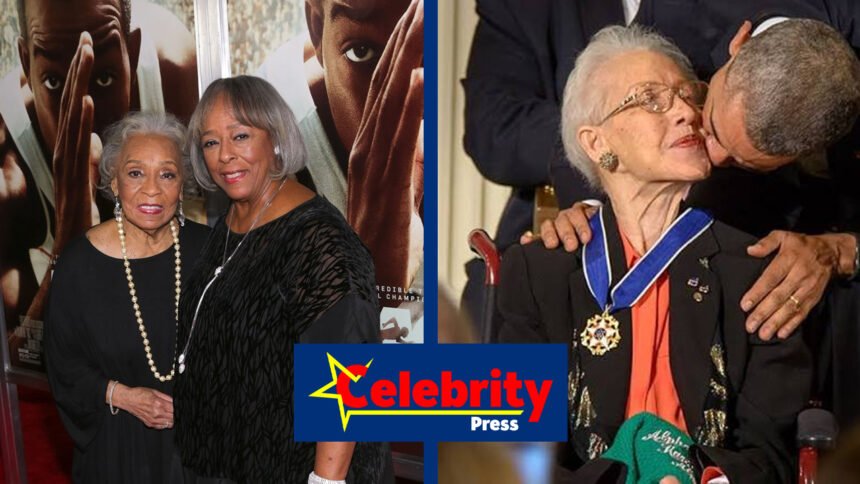
Joylette Goble, known today as Joylette Goble Hylick, is the eldest daughter of Katherine Johnson, the pioneering NASA mathematician whose calculations helped send American astronauts into orbit and whose story was told to a global audience through the film Hidden Figures. Joylette’s father was James Francis Goble, Katherine Johnson’s first husband, who died of a brain tumor in 1956, leaving Katherine to raise Joylette and her two younger sisters largely on her own during the years leading up to her historic NASA career.
This article looks at what is known about Joylette Goble, from her early life as one of three daughters raised by a single mother during a pivotal period in American history to her adult role helping preserve and share her mother’s legacy. It also traces Katherine Johnson’s own remarkable career at NASA, since so much of the public interest in Joylette comes from her connection to one of the most celebrated figures in the history of American space exploration.
Quick Bio Table
| Category | Details |
|---|---|
| Full Name | Joylette Goble (now Joylette Goble Hylick) |
| Known For | Eldest daughter of NASA mathematician Katherine Johnson |
| Mother | Katherine Johnson, NASA mathematician |
| Father | James Francis Goble, who died in 1956 |
| Sisters | Two younger sisters, including Katherine Moore |
| Notable Work | Co-author of family memoir writings about Katherine Johnson |
Her Early Life
Joylette Goble was born to Katherine Johnson, then known as Katherine Coleman, and her first husband, James Francis Goble, one of three daughters the couple raised together. Her father died of a brain tumor in 1956, when Joylette was still a child, leaving Katherine to raise Joylette and her two younger sisters largely as a single mother during the years immediately before Katherine’s groundbreaking work at NASA began to take shape.
This period of loss and single parenthood shaped the family’s early years significantly, with Katherine Johnson later crediting her ability to hold the family together during this difficult time as an important part of her own life story, one she and her daughters later chose to document publicly through their own writing.
Growing Up During Katherine Johnson’s Rise at NASA
Joylette and her sisters grew up during the years their mother worked as a mathematician at NASA’s Langley Research Center, performing complex orbital trajectory calculations that would prove critical to the success of early American spaceflight missions, including John Glenn’s historic 1962 orbital flight. This period of Katherine Johnson’s career unfolded during the height of the Space Race and against the backdrop of racial segregation, a combination of professional pressure and social barriers that shaped the household environment Joylette and her sisters grew up in.
Katherine Johnson’s determination to succeed despite significant obstacles, both as a woman and as an African American mathematician working within a still largely segregated NASA facility in Virginia, became a defining part of the family’s story, one that Joylette later helped share publicly as her mother’s legacy gained wider recognition decades later.
Co-Authoring Her Mother’s Story
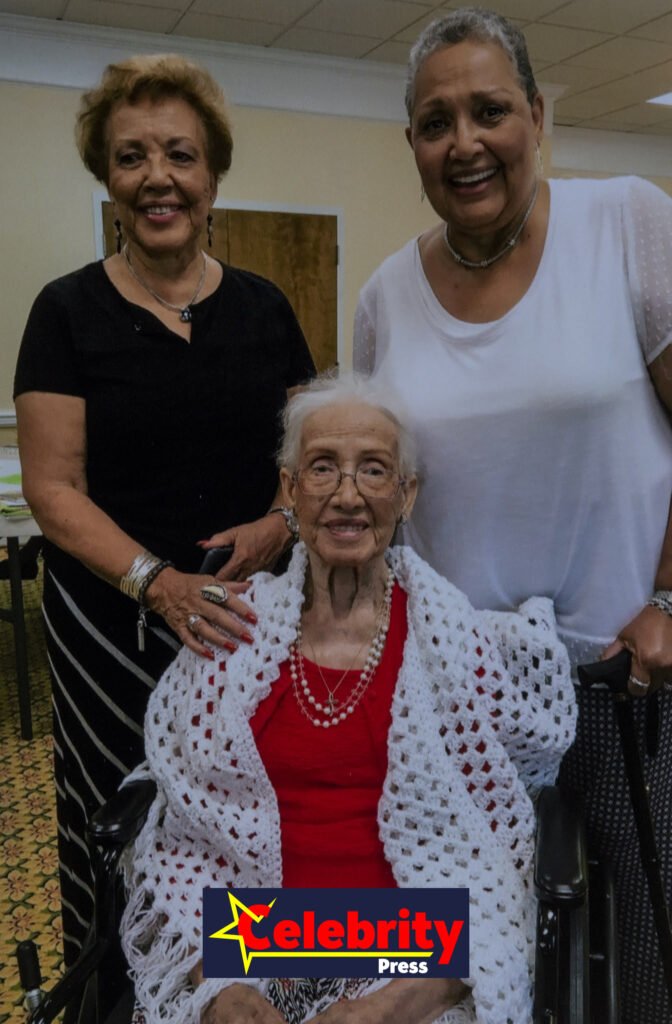
Joylette Goble Hylick has worked alongside her mother and sisters to document and share Katherine Johnson’s life story, including co-authoring written works about their family history and their mother’s journey from a segregated Virginia childhood to a celebrated career at NASA. This collaborative effort to preserve and share their mother’s legacy has continued even after Katherine Johnson’s death in 2020, ensuring that the family’s own perspective on her remarkable life remains part of the broader public record.
This kind of direct family involvement in documenting a parent’s legacy is relatively unusual, giving audiences access to a more personal and detailed account of Katherine Johnson’s life than might otherwise have been available through her professional NASA records alone.
Public Appearances Honoring Katherine Johnson
Joylette Goble has appeared publicly at events honoring her mother’s legacy, including speaking at the unveiling of Katherine Johnson’s portrait at the Smithsonian National Museum of African American History and Culture in December 2016, an event held before a special screening of Hidden Figures, the film that introduced Katherine Johnson’s story to a much wider global audience. She has also given interviews alongside her sister Katherine Moore, sharing memories of their mother’s mathematical upbringing and her approach to raising her daughters with high expectations for education and achievement.
These public appearances have positioned Joylette as one of the primary voices helping to contextualize her mother’s legacy for audiences who came to know Katherine Johnson’s story primarily through Hidden Figures rather than through her decades of actual work at NASA.
Katherine Johnson’s Historic NASA Career
Katherine Johnson joined NASA’s predecessor organization in 1953, eventually becoming one of the agency’s most trusted human computers, performing calculations so precise that astronaut John Glenn reportedly asked engineers to have Katherine personally verify the numbers generated by early electronic computers before his historic orbital flight. Her work extended across numerous NASA missions over more than three decades, including contributions to the Apollo program and the Space Shuttle, establishing a legacy of technical excellence that went largely unrecognized publicly until decades after her most significant contributions.
This extraordinary career, achieved while raising Joylette and her sisters largely as a single mother during its early years, forms the foundation of the family’s story that Joylette and her sisters have worked to share more broadly following the renewed public attention that came with Hidden Figures.
Hidden Figures and Renewed Public Recognition
The 2016 film Hidden Figures, based on Margot Lee Shetterly’s book of the same name, introduced Katherine Johnson’s story, along with those of fellow NASA mathematicians Dorothy Vaughan and Mary Jackson, to audiences around the world, transforming Katherine Johnson from a relatively obscure figure within space history into a widely celebrated public icon. This surge in public recognition brought renewed attention to Katherine Johnson’s family, including Joylette, who found themselves speaking publicly about their mother’s legacy to an audience far larger than had previously shown interest in her remarkable career.
This dramatic shift in public awareness, arriving so many decades after Katherine Johnson’s most significant NASA contributions, gave Joylette and her sisters an opportunity to share their own personal perspective on their mother’s life at a moment when global interest in her story had reached its peak.
Preserving a Family Legacy of Achievement
Katherine Johnson received the Presidential Medal of Freedom in 2015, one of the highest civilian honors in the United States, recognition that came during her lifetime and allowed her and her family, including Joylette, to witness the full scope of public appreciation for her contributions to American space exploration. This recognition, combined with the continued cultural impact of Hidden Figures, has helped ensure that Katherine Johnson’s legacy, and by extension the story of the family that supported her throughout her career, remains part of the broader historical record of American achievement.
Joylette’s continued involvement in sharing this legacy reflects a broader pattern among families of historically significant figures who take an active role in shaping how their parent’s story is told and remembered by future generations.
Why People Still Search for Her Name
Interest in Joylette Goble comes largely from people who discovered Katherine Johnson’s story through Hidden Figures and want to learn more about the family that supported her throughout her groundbreaking NASA career. Because Katherine Johnson’s legacy continues to receive significant attention in discussions of both space history and the history of women and African Americans in STEM fields, questions about her family, including Joylette, continue to surface among those researching her complete life story.
Because Joylette has taken an active, public role in preserving her mother’s legacy, more verifiable information exists about her than is typical for children of historically significant figures who choose to remain entirely outside of public life.

Katherine Johnson’s Educational Background
Katherine Johnson demonstrated exceptional mathematical ability from a young age, graduating from high school at fourteen and college at eighteen, a pace of academic achievement that was extraordinarily rare for an African American woman in the segregated educational system of West Virginia during the 1930s. Her early academic gifts eventually led her to a teaching career before she joined the organization that would become NASA, beginning a professional journey that would ultimately place her among the most important unsung figures in the history of American space exploration.
This foundation of early educational achievement, established decades before Joylette was born, set the stage for the remarkable career that would later come to define much of the public understanding of the Goble family’s place in American history.
Segregation and the West Area Computing Unit
Katherine Johnson began her NASA career within the West Area Computing unit, a segregated group of African American women mathematicians who performed complex calculations for the agency during a period when Virginia’s Langley Research Center maintained separate facilities for Black and white employees. This challenging professional environment, shaped directly by the racial segregation policies of the era, formed the backdrop against which Katherine Johnson raised her three daughters, including Joylette, during the years before broader civil rights progress began reshaping American workplaces.
This historical context adds significant depth to understanding the environment Joylette grew up within, one shaped simultaneously by her mother’s extraordinary professional achievements and by the systemic racial barriers those achievements had to overcome.
The Book Behind Hidden Figures
Margot Lee Shetterly’s 2016 book, Hidden Figures: The American Dream and the Untold Story of the Black Women Mathematicians Who Helped Win the Space Race, provided the historical foundation for the film adaptation, drawing on extensive research and interviews to document the previously underappreciated contributions of Katherine Johnson and her colleagues. The book’s detailed research helped ensure that the film adaptation remained grounded in accurate historical detail, giving audiences a more complete picture of the challenges these women overcame during their NASA careers.
This thorough documentation of Katherine Johnson’s career and its historical context has also indirectly supported the accuracy of how Joylette and her sisters have been able to discuss and contextualize their mother’s legacy in subsequent interviews and public appearances.
The Broader Legacy of NASA’s Human Computers
Katherine Johnson’s story represents just one part of a broader history of human computers, the women mathematicians who performed critical calculations for NASA before electronic computers became reliable enough to be fully trusted for complex orbital mechanics. This broader history has gained increasing recognition in recent years, with Katherine Johnson serving as one of the most prominent examples of these largely unrecognized contributors to America’s early space program.
This growing historical recognition has extended benefits beyond Katherine Johnson herself, contributing to broader public interest in the family members, including Joylette, who lived through and helped preserve the story of this critical but long overlooked chapter of American scientific history.
Conclusion
Joylette Goble, known today as Joylette Goble Hylick, is the eldest daughter of NASA mathematician Katherine Johnson, raised largely by her mother alone following her father’s death in 1956. Her continued work helping to share and preserve her mother’s remarkable legacy reflects a meaningful contribution to how one of the most celebrated figures in American space history continues to be remembered.
Frequently Asked Questions
Who is Joylette Goble?
Joylette Goble, now known as Joylette Goble Hylick, is the eldest daughter of NASA mathematician Katherine Johnson.
What happened to Joylette Goble’s father?
Her father, James Francis Goble, died of a brain tumor in 1956 when Joylette was still a child.
What is Katherine Johnson best known for?
She is best known for her work as a NASA mathematician whose calculations were critical to early American spaceflight, including John Glenn’s 1962 orbital mission.
Has Joylette Goble spoken publicly about her mother?
Yes. She has given interviews and spoken at public events, including the unveiling of Katherine Johnson’s portrait at the Smithsonian in 2016.
Did Katherine Johnson receive recognition for her NASA career during her lifetime?
Yes. She received the Presidential Medal of Freedom in 2015 and lived to see the release of the film Hidden Figures in 2016.