

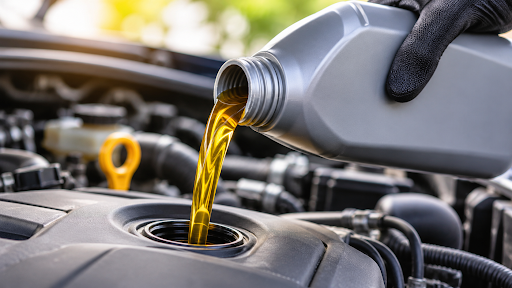
Standing in front of a wall of oil bottles, or staring at a list of numbers on a service quote, is confusing for most drivers. 5W30, 0W20, semi synthetic, low ash, manufacturer approved. It all sounds like a different language, yet the choice matters more than almost any other small decision under the bonnet. The right oil protects the engine, keeps it running smoothly, and helps it last. The wrong one can quietly cause wear that only shows up much later. It is one of the key reasons routine car servicing exists, and it is also something every driver can learn to understand.
This guide explains how to find the right oil for your car, how to read the labels, and what to watch out for.
The Quick Answer
If you only have a minute, here is what to know.
- The correct oil for your car is set by the manufacturer, not by guesswork
- The vehicle handbook is the most reliable place to find it
- The key details are the viscosity grade, the oil type, and any required approval
- A garage can look up the exact specification using your registration number
- Using the wrong oil is not always obvious at first, but it can cause long term wear
Why the Right Oil Matters So Much
Engine oil does far more than keep things slippery. It reduces friction between fast moving metal parts, carries heat away from hot areas, and holds tiny particles in suspension so they can be caught by the filter. It also helps protect against corrosion and keeps internal passages clean.
Modern engines are built to very fine tolerances. The gaps between components are tiny, and oil flows through narrow channels to reach them. If the oil is too thick, it may struggle to reach important areas quickly on a cold start. If it is too thin, it may not protect parts properly once the engine is hot. The correct grade is chosen specifically to suit how that engine was designed.
How to Read an Oil Grade
The most visible number on any bottle is the viscosity grade, such as 5W30. It looks technical, but it is simple once broken down.
| Part of the grade | What it means | Example |
| First number | How easily the oil flows when cold | The 5 in 5W30 |
| The letter W | Stands for winter, showing the cold rating | The W in 5W30 |
| Second number | How thick the oil stays at normal operating temperature | The 30 in 5W30 |
A lower first number means the oil flows more easily on a cold start. This matters because a large share of engine wear happens in the first few seconds after starting, before oil has fully circulated. A higher second number means a thicker oil once the engine is warm.
Many modern engines call for thinner oils, such as 0W20 or 5W30, because they flow quickly and help fuel economy. Older engines may specify something thicker. The right grade is whatever the manufacturer specifies, and it should not be swapped for a different one without good reason.
The Three Main Types of Oil
Alongside the grade, oil comes in different types, depending on how it is made.
| Type | How it is made | Typical use |
| Mineral | Refined from crude oil with minimal processing | Older, simpler engines |
| Semi synthetic | A blend of mineral and synthetic oils | Many everyday cars |
| Fully synthetic | Engineered for consistency and high performance | Most modern engines, turbo and high output engines |
Fully synthetic oils tend to resist breakdown better under heat and keep flowing well in cold weather. This is why many modern engines require them. Using a lower grade of oil than specified can lead to faster wear, even if the engine seems to run normally at first.
How to Find the Right Oil for Your Car
There is no need to guess. These are the most reliable ways to get the answer, starting with the best.
- Check the vehicle handbook. The service section lists the correct viscosity, the oil specification, and the capacity. This is the most trustworthy source.
- Look at the oil filler cap. Many engines have the recommended viscosity printed on the cap, such as 5W30. It is a quick reminder, though it may not show the full specification.
- Check the service history. If the car has been serviced regularly, the paperwork or invoices usually record which oil was used previously.
- Use a registration lookup. Many garages and oil retailers can look up the correct oil using your number plate. This is quick and usually accurate.
- Ask a qualified technician. A garage can confirm the correct specification, especially where there are several variants of the same model. If you are local to Aldershot, the technicians at GForce Tyres can check it for you before any oil goes in.
- Check the manufacturer’s recommendations online. Many manufacturers publish the required specifications for their models.
Whichever route you choose, always match the full specification, not just the viscosity grade.
Why Specification Matters as Much as Grade
Two bottles can both say 5W30 and still be completely different products. Beyond the grade, many engines require oil that meets a specific performance standard or carries a manufacturer approval code. These approvals confirm the oil has been tested for that particular engine design.
This is especially important for modern engines, where emissions equipment and tight tolerances place extra demands on the oil. Using an oil that matches the grade but not the specification may seem harmless, yet it can affect wear, emissions equipment, and long term engine health. The handbook will usually list the approval code needed, and it is worth matching it exactly.
Special Cases Worth Knowing About
Not every engine has the same needs. A few situations call for extra care.
Diesel Engines With a Particulate Filter
Diesel cars fitted with a particulate filter generally need a low ash oil. Standard oils can leave residue that gradually clogs the filter, which can lead to warning lights and expensive repairs.
Hybrids and Stop Start Cars
Hybrid engines often start and stop frequently, and the oil is placed under different demands as a result. Many require thin, low viscosity oils designed for this pattern. Always follow the manufacturer’s specification rather than assuming a standard petrol oil will do.
Turbocharged Engines
Turbochargers spin at very high speeds and generate intense heat. Fully synthetic oil is usually required, since it holds up far better under these conditions.
High Mileage Engines
Older, high mileage engines can sometimes benefit from oils designed to condition seals and reduce leaks. Even so, the base specification should still match what the manufacturer calls for.
How to Check Your Oil Level
Knowing how to check the oil is just as useful as knowing which oil to buy. It only takes a couple of minutes.
- Park on level ground and switch off the engine.
- Wait a few minutes so the oil can settle back into the sump.
- Pull out the dipstick and wipe it clean with a cloth.
- Push it fully back in, then pull it out again.
- Check where the oil level sits between the minimum and maximum marks.
- Look at the colour and texture of the oil on the stick.
The level should sit between the two marks. If it is near or below the minimum, it needs topping up. Fresh oil usually looks amber, and it darkens with use. Oil that looks gritty, milky, or very thick and black deserves attention.
Signs You May Be Running Low or Using the Wrong Oil
The engine often gives hints when something is off.
- An oil warning light on the dashboard, which should never be ignored
- A ticking or tapping noise from the engine, especially on a cold start
- A burning smell, which can mean oil is leaking onto hot parts
- Blue smoke from the exhaust, a sign oil may be burning
- Noticeably worse fuel economy
- A rougher or noisier engine than usual
If the oil warning light comes on while driving, the safest response is to stop as soon as it is safe and check the level. Continuing to drive with low oil pressure can cause serious damage in a very short time.
Can You Mix Different Oils?
In an emergency, topping up with a small amount of the right grade is far better than driving with low oil. Modern oils are designed to be compatible, so a small top up will not usually cause immediate harm.
That said, mixing is not ideal as a regular habit. Combining different types or specifications can dilute the benefits of the better oil. If you have had to top up with whatever was available, it is sensible to have the oil fully changed at the next opportunity.
Equally, overfilling is a problem too. Too much oil can create foaming and extra pressure, which can damage seals and reduce engine performance. The correct level is always between the two marks on the dipstick.
What Happens If You Use the Wrong Oil
The effects are not always immediate, which is what makes this mistake easy to overlook. The engine may run perfectly well for weeks or months. Over time, though, the consequences can build.
- Oil that is too thick can struggle to flow on cold starts, causing extra wear
- Oil that is too thin can fail to protect components once hot
- Oil without the right specification can harm emissions equipment
- Reduced lubrication can increase internal wear and shorten engine life
- Warranty problems can arise if the wrong oil has been used
It is one of those cases where the cost of getting it right is small, and the cost of getting it wrong can be considerable.
How Often Should Oil Be Changed?
Oil breaks down over time, even if the car is not driven much. The manufacturer’s recommended interval is the right guide, and for many cars that means roughly every 12 months or 10,000 to 12,000 miles, whichever comes first. Some vehicles have longer intervals, and others call for more frequent changes, especially if they do lots of short trips or stop start driving.
An oil change is a core part of a full service, along with a new filter and a series of related checks. For a clearer picture of exactly what is covered, this breakdown from GForce Tyres of what is included in a full car service explains it in detail. It also shows why oil is rarely changed in isolation.
Why Oil Leaks Matter at MOT Time
Oil levels and leaks do not only affect how the engine runs. A significant leak can be flagged during an annual MOT test, since excessive leakage is both an environmental and a safety concern. If you have noticed spots on the driveway or a falling oil level, it is worth having a garage such as GForce Tyres take a look before your next test, to avoid an unwelcome surprise on the day.
Common Oil Myths
A few persistent beliefs lead drivers astray.
- “Thicker oil is always better”: not true, since the wrong thickness can reduce protection and flow
- “Dark oil means it needs changing straight away”: not always, as modern oils darken quickly while working properly
- “Any oil will do as long as it is the same grade”: not true, since the specification matters too
- “Oil only needs changing when the light comes on”: incorrect, as the warning light usually signals a serious problem, not a reminder
- “If the engine sounds fine, the oil is fine”: not necessarily, since wear can develop quietly
A Simple Do and Don’t Guide
| Do | Don’t |
| Follow the handbook for grade and specification | Guess based on what is cheapest |
| Check the oil level regularly | Wait for the warning light |
| Use the correct oil for diesel, hybrid, or turbo engines | Assume all oils are interchangeable |
| Keep service records | Skip changes because the car “seems fine” |
| Top up with the right grade if low | Overfill past the maximum mark |
Linking Oil Problems to Other Warning Signs
Oil issues rarely appear completely on their own. Low or degraded oil often shows up alongside other symptoms, such as a rough idle, unusual noises, or a dashboard warning. Recognising these patterns early helps you act before they escalate, and it is a good habit to treat any combination of these signs as a prompt to book a check.
Building a Simple Oil Habit
A small routine takes the stress out of all of this.
- Check the oil level about once a month, and before any long journey
- Note the correct grade and specification somewhere easy to find, such as your phone
- Keep service invoices that record what oil was used
- Book the next service as soon as the last one is done
- Act promptly on any oil warning light, leak, or unusual noise
None of this takes long, but it consistently prevents the kind of slow, hidden wear that leads to bigger problems.
Final Thoughts
Finding the right oil for your car is not as complicated as it first appears. The manufacturer has already decided what the engine needs, and the handbook, filler cap, or a quick registration lookup can tell you exactly what that is. The key is to match the full specification, not just the viscosity grade, and to keep up with regular checks and changes.
For drivers across Aldershot, Farnborough, Fleet, Farnham, Ash Vale, Tongham, and North Camp, the takeaway is a reassuring one. A few minutes spent checking the oil, and a little care in choosing the right type, goes a long way toward protecting one of the most important and expensive parts of the car. If you are ever unsure, a quick check with a local garage such as GForce Tyres can confirm the right oil for your engine. The right oil, changed on time, is one of the simplest ways to keep an engine healthy for years.
Frequently Asked Questions
How do I find out which oil my car needs?
The vehicle handbook is the most reliable source. You can also check the oil filler cap, look up your registration number, or ask a qualified technician to confirm the exact specification.
What does 5W30 mean on an oil bottle?
The first number shows how easily the oil flows when cold, and the W stands for winter. The second number shows how thick the oil stays at normal operating temperature.
Is fully synthetic oil always better?
For many modern engines, it is required, since it holds up better under heat and flows well in cold weather. The best choice is always the one the manufacturer specifies for your engine.
Can I top up with a different brand of oil?
In a pinch, a small top up with the correct grade and specification is fine. It is best to have a full oil change at the next opportunity if you have mixed products.
What should I do if the oil warning light comes on?
Stop as soon as it is safe, switch off the engine, and check the oil level. If the level is low, top up with the correct oil, and if the light stays on, have the car checked before driving further.