

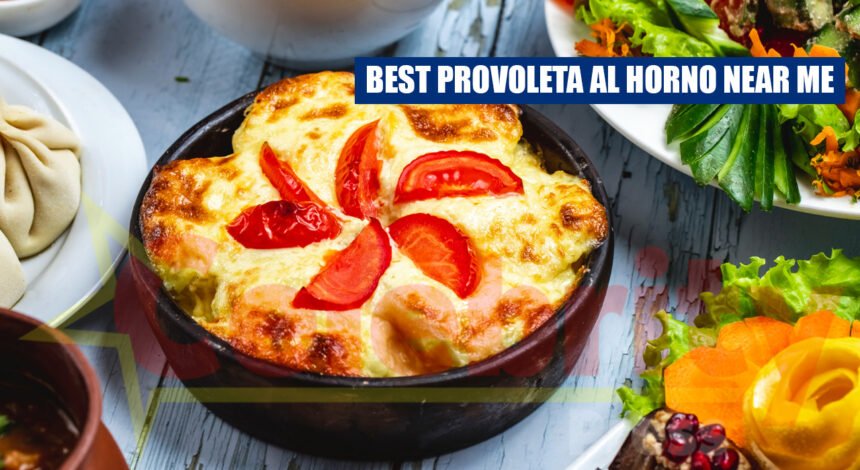
Best provoleta al horno near me is one of those searches that usually means you already tried this dish once and now you cannot stop thinking about it. Maybe you had it at an Argentine steakhouse, watched the cheese bubble in a small cast iron pan, and tore off a piece of bread to catch the melted center. Once you taste real provoleta al horno, ordinary melted cheese just does not compare. This guide explains what the dish actually is, where it came from, what separates a great version from a average one, and how to find the best plate near you.
What Is Provoleta al Horno
Provoleta al horno is a thick round of provolone style cheese that gets baked or seared until the outside turns golden and slightly crisp while the inside stays soft and stretchy. The words break down simply. Provoleta refers to the Argentine style of provolone cheese, and al horno means “in the oven” in Spanish. Traditional Argentine provoleta is usually cooked directly on a grill, but the oven baked version gives nearly the same result without needing an open flame, which is why it shows up on so many restaurant menus in the United States.
The cheese used for this dish is firmer and less oily than the provolone you might slice for a sandwich. It holds its shape under high heat instead of collapsing into a puddle. A good kitchen will use a cut about one inch thick, season it lightly, and cook it fast in a hot pan or oven so the outside browns before the inside turns runny. That balance between crisp and gooey is the entire point of the dish.
Restaurants typically serve provoleta al horno in the same small cast iron skillet it was cooked in, so it stays hot at the table. It arrives with crusty bread for scooping, and often with chimichurri sauce spooned right over the top.
Where Provoleta al Horno Comes From
The story behind this dish is worth knowing because it explains why the cheese behaves the way it does. Provoleta traces back to Natalio Alba, an Italian immigrant from Calabria who settled in Córdoba, Argentina, in the early twentieth century and worked in the dairy industry. During the 1940s, Alba wanted to bring together two things he loved: Italian pasta filata cheese making and Argentina’s grilling culture, known as asado. He experimented until he created a firmer, drier version of provolone that could sit directly on a hot grill without melting through the grates.
The name provoleta comes from provola, the Italian word for a small provolone. Alba’s cheese became so popular that it was officially recognized in Argentina’s food code in the 1950s and trademarked in 1963, which is why the term refers to both the cheese itself and the finished dish. Over the following decades, provoleta became a fixture at asados across Argentina and Uruguay, almost always served as the starter that arrives before the grilled meat.
The oven baked version developed later as a practical alternative for home cooks and restaurants without a wood or charcoal grill. Baking in a cast iron pan produces nearly the same crisp bottom and melted center, which is why al horno preparations are so common outside South America, including in the United States.
What Makes a Great Plate of Provoleta al Horno
Not every version of this dish is made the same way, and the difference between a great plate and a disappointing one usually comes down to a handful of details.
Cheese thickness matters. If the slice is too thin, it melts all the way through and turns into an oily puddle with no texture. A proper cut is about one inch thick, which gives the cheese time to form a crust before the center fully liquefies.
The crust should have real texture. Some kitchens dust the cheese with a light coating of flour before cooking, which helps it develop a crisp golden layer on the outside. Without this step, or without high enough heat, the cheese can turn soft and greasy instead of crisp and browned.
Seasoning should be simple. Traditional provoleta uses just a few ingredients: dried oregano, crushed red pepper flakes, and a drizzle of good olive oil. When a kitchen piles on too many extra toppings, it usually means they are trying to cover up mediocre cheese.
It has to arrive hot. Provoleta al horno only works when it is served bubbling straight from the pan. Once it cools, the cheese firms back up and loses the stretchy texture that makes the dish special, so timing between the kitchen and your table matters more than people realize.
Chimichurri should taste bright, not bottled. Real chimichurri is made with fresh parsley, garlic, oregano, vinegar, and olive oil. It should taste sharp and herby, not like a jarred sauce with little flavor.
How to Find the Best Provoleta al Horno Near You
If you are searching for the best provoleta al horno near me, a few strategies will help you land on the right place instead of guessing from a menu photo.
Look for Argentine steakhouses and parrillas first. These restaurants build their whole menu around grilling, and provoleta is almost always one of their most requested starters. A kitchen that takes its asado seriously usually takes its provoleta just as seriously.
Check the menu description. Restaurants that care about authenticity will usually mention how the dish is prepared, whether it comes with chimichurri, and what type of bread is served alongside it. A vague one line description with no detail is often a sign the kitchen is not putting much thought into the dish.
Read recent reviews for specific mentions of texture. Search review sites for words like “gooey,” “crispy,” or “melty” rather than just star ratings. Reviews that describe the actual eating experience tell you more than a general rating ever will.
Ask about the cheese. Some restaurants use imported provoleta cheese, while others substitute aged provolone, which is the common approach in the United States since authentic provoleta cheese can be hard to find outside South America. Both can taste great when handled correctly, so do not assume one is automatically better.
Try it as part of a full asado experience. Many Argentine restaurants offer provoleta as a shared starter meant to come before grilled meats. Ordering it this way, the way it is traditionally served, often means the kitchen has more practice getting the timing right.
How Provoleta al Horno Is Traditionally Served
Provoleta al horno is meant to be shared. A single order easily serves two or three people as a starter, especially since the dish is rich and filling on its own. It is almost always paired with crusty bread, which is used to scoop up the melted cheese and any oil left in the pan.
Chimichurri sauce is the most common accompaniment, spooned directly over the hot cheese right before it reaches the table. The garlic, parsley, and vinegar in the sauce cut through the richness of the cheese and add brightness to every bite. Some restaurants also offer extra oregano, chili flakes, or a side of tomato for guests who want to customize the flavor further.
Because provoleta al horno is traditionally the first course of an asado, many restaurants serve it right before bringing out grilled meats like short ribs, sausage, or steak. If you are ordering it on its own rather than as part of a larger meal, a simple side salad or a glass of Argentine Malbec pairs well with the richness of the cheese.
Popular Variations You Might Find on a Menu
While the classic version stays close to just cheese, herbs, and olive oil, some restaurants offer creative takes worth trying.
Provoleta rellena, or stuffed provoleta, includes fillings like ham, chorizo, blood sausage, roasted peppers, or vegetables baked into the center of the cheese. This version turns the appetizer into something closer to a small main dish.
Herb crusted provoleta swaps the standard oregano for a mix of fresh herbs like thyme, rosemary, or basil, giving the dish a more aromatic, earthy flavor.
Sweet and savory versions sometimes include a drizzle of honey, fig jam, or quince paste alongside the cheese, which balances the saltiness with a touch of sweetness. This pairing, inspired by classic Italian cheese boards, has become a popular modern twist.
None of these variations replace the original, but they show how flexible the dish can be while still keeping its core identity: a hot, melty, crisp edged cheese meant to be shared at the table.
Why This Dish Has Become So Popular Outside Argentina
Provoleta al horno has grown well beyond Argentina’s borders in recent years, showing up on menus at Argentine restaurants, modern steakhouses, and even some fusion spots across the United States. Part of the appeal is simplicity. With just a handful of ingredients, the dish delivers a big payoff, which fits the current appetite for straightforward, high quality comfort food. It also photographs well, with its bubbling golden top and stretchy center, which has helped it spread through food focused social media.
For diners who love shareable starters, provoleta al horno checks every box. It is warm, rich, easy to eat with friends, and different enough from typical American appetizers to feel like a discovery, even though the recipe itself has been a staple in Argentina for more than eighty years.
A Quick Guide to Ordering It Right
When you sit down at a restaurant and see provoleta al horno on the menu, a few quick questions to the server can help you get the best version of the dish. Ask whether it is baked or grilled, since both methods work but produce slightly different textures. Ask if it comes with chimichurri, since not every kitchen includes it automatically. And if you plan to share it as a starter before a full asado style meal, let your server know so the kitchen can time it to arrive first, hot and ready to eat before the rest of your meal.
Conclusion
Provoleta al horno earns its popularity honestly. A dish built from Italian cheese making and Argentina’s love of open fire cooking, it has stayed close to its roots for more than eighty years while finding new fans across the world. The best version comes down to a few simple things: thick, quality cheese, a real crisp crust, a stretchy melted center, and a fast trip from the pan to your table. Keep those details in mind the next time you search for the best provoleta al horno near you, and you will know exactly what to look for on the menu.
Frequently Asked Questions
What is the difference between provoleta and provoleta al horno?
Provoleta refers to the Argentine style provolone cheese and the traditional dish, which is usually cooked directly on a grill. Provoleta al horno specifically means the oven baked version, which uses a cast iron pan or oven instead of an open flame but produces a similar crisp and melty result.
What does provoleta al horno taste like?
It tastes rich, salty, and slightly smoky, with a crisp browned crust on the outside and a soft, stretchy center. The flavor is similar to a sharp, aged provolone, often brightened with oregano, chili flakes, and olive oil.
What is the best way to eat provoleta al horno?
It is best eaten hot, straight from the pan, scooped up with crusty bread. Many people add a spoonful of chimichurri sauce on top for extra flavor before digging in.
Can I find real provoleta cheese in the United States?
Authentic provoleta cheese can be hard to find outside South America, so most American restaurants and home cooks use a thick cut of aged provolone instead, which produces very similar results when cooked correctly.
Is provoleta al horno served as a main dish or an appetizer?
It is traditionally served as an appetizer, usually before grilled meats at an Argentine asado. That said, a full order is filling enough that some people enjoy it as a light meal on its own, especially when paired with a salad or extra bread.