
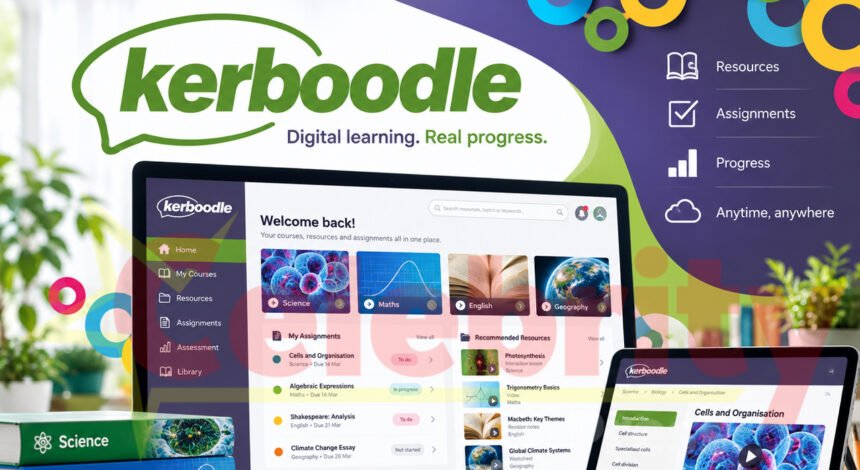
Kerboodle shows up constantly in searches from parents and students trying to figure out what a school-assigned login actually is, and whether it’s safe to use. The short answer is straightforward: Kerboodle is owned and operated directly by Oxford University Press, one of the world’s largest and oldest academic publishers, which makes it about as institutionally legitimate as UK school software gets. That doesn’t mean the platform is complaint-free, so it’s worth walking through what it actually is and where the genuine friction lies.
What Kerboodle Actually Is
Kerboodle is a digital learning platform that hosts interactive versions of Oxford University Press textbooks, lessons, and assessment tools, tied to specific published series and mapped directly to exam board specifications including AQA, Edexcel, OCR, OxfordAQA, and some Cambridge international curricula. Rather than being a general-purpose learning app, it functions as the digital companion to physical OUP textbooks schools have already purchased, covering secondary subjects from science and history to English across GCSE and A-Level.
Confirmed Ownership
Every official Kerboodle resource, from its product pages to its support hub, is hosted directly on Oxford University Press’s own domains, global.oup.com and support.kerboodle.com, rather than existing as a separate third-party brand simply licensing the OUP name. A search of the UK’s Companies House register did not turn up a separately incorporated “Kerboodle Limited,” which is consistent with it operating as a product line of OUP itself rather than a standalone legal entity, a structure that’s common for a publisher’s in-house digital platform.
The Technology Behind It
The underlying platform appears to be built with Avallain, a Swiss education technology vendor, according to Avallain’s own published customer case study describing its work with Oxford University Press on Kerboodle. Using a specialist third-party platform vendor rather than building everything from scratch is a normal, common arrangement for large publishers moving into digital products, and it doesn’t change the fact that OUP owns and controls the Kerboodle brand and content itself.
How Schools License and Access It
Kerboodle is sold to schools as an institutional subscription rather than to individual families, with OUP’s own support pages covering trials, renewals, and cancellations for school administrators. Third-party edtech pricing directories report subscriptions starting from roughly £400 a year, though this figure comes from an independent listing rather than an officially published OUP price list, and actual costs vary depending on which course packages and how many student seats a school selects.
How Students Actually Log In
According to Kerboodle’s own official support documentation, students access the platform using a username, a password, and a unique institution code specific to their school, with the initial password set to match the username until the student changes it on first login. This entirely school-gated access model means there’s no public sign-up flow for an individual to create a Kerboodle account independently, which is worth knowing if you’ve seen conflicting information elsewhere.
Why “Kerboodle Login” Is Such a Common Search
Because access depends on a three-part credential system that most students only encounter through their school, confusion around logging in is extremely common, particularly among younger students unfamiliar with the institution-code step. This is a usability quirk of the credential system itself rather than any sign of a technical problem with the platform.
Why “Kerboodle Answers” Is Also a Common Search
A cluster of student forum threads and social content around getting “Kerboodle answers” reflects the same pattern seen across virtually every auto-marked homework platform: students looking for shortcuts on assigned work. Kerboodle does include a legitimate, built-in “reviewing your answers” feature intended for checking completed homework, which may be part of what’s driving this specific search phrase, rather than it pointing to any flaw in the platform’s security.
What the Real Complaints Look Like
Kerboodle’s Trustpilot page carries only a handful of reviews, a small enough sample that it shouldn’t be read as a definitive verdict either way, with an average landing in the “poor” range. Specific complaints described a slow, hard-to-navigate interface, assignments occasionally failing to open properly, and homework pitched above a student’s current grade level. A more positive review praised being able to complete interactive textbook homework from anywhere, while separately noting a lack of self-check answer keys during revision.
An Older, More Detailed Complaint From IT Staff
A 2014 discussion thread on EduGeek, a forum for UK school IT professionals, described a rocky rollout of a Kerboodle platform update at the time: videos failing to load intermittently, inconsistent behavior across different browsers, and difficulty setting up new student accounts, with one IT administrator describing the update bluntly as poor quality. That thread is now more than a decade old and describes a specific historical update rather than the platform’s current state, but it’s a useful data point showing that technical friction with Kerboodle isn’t a new phenomenon.
No Sign of Fraud or Scam Activity
Searches specifically for scam, fraud, or fake-site allegations against Kerboodle turned up nothing beyond the ordinary Trustpilot page itself, no phishing warnings, no reports of stolen payment details, no consumer-protection complaints. For a platform used across UK secondary schools for well over a decade, that absence of any scam chatter is itself a meaningful, positive signal, since genuinely fraudulent operations tend to accumulate exactly this kind of complaint over time.
The Content-Farm Problem Around Kerboodle’s Name
Because Kerboodle is sold purely business-to-business, with no consumer-facing marketing explaining “what Kerboodle is” to curious parents, a number of generic, low-authority websites have filled that information gap with templated explainer articles bearing near-identical titles. Several of these read as mass-produced filler unconnected to any real expertise in UK school software, which is worth flagging separately from Kerboodle itself: when researching a platform like this, it’s worth prioritizing a source you can independently verify over a generic third-party explainer that may simply be chasing search traffic on the brand name.
Comparing Kerboodle to Similar Platforms
Kerboodle regularly gets compared against other UK school digital learning tools such as GCSEPod, Seneca Learning, Sparx, and CENTURY Tech, all occupying a broadly similar niche of curriculum-aligned digital resources sold to schools. None of these are meaningfully more or less legitimate as businesses than Kerboodle; the real differences come down to which specific exam board content each covers and how each handles interface design, which is a product-preference question worth weighing rather than a trust question.
What This Means If You’re a Parent
There’s no legitimacy concern to worry about with Kerboodle itself: it’s a direct, publicly confirmed product of Oxford University Press, tightly integrated with real, named textbook series and exam board specifications that a scam operation would have no reason to build. If your child struggles with logging in or finds an assignment confusing, that’s worth raising with the school directly, since the school controls the account setup and subscription, not Kerboodle’s public support team.
What This Means If You’re a Student
If you’ve hit a Kerboodle login error or a slow-loading assignment, that reflects a documented, ordinary technical friction point rather than anything wrong on your end, and it’s worth reporting to a teacher rather than assuming the platform has failed entirely. For revision, Kerboodle’s built-in answer-review tools are the legitimate route to check completed work, a more reliable option than third-party “answers” content of uncertain origin and accuracy.
Why Publisher-Owned Platforms Tend to Be Safer Bets
A digital platform built and run directly by an established publisher like Oxford University Press carries a structurally different risk profile than an independent startup app: OUP has an existing reputation across physical textbooks going back centuries, direct financial incentive to maintain trust with the schools that buy its books, and enough institutional scale that a serious data or security failure would draw far more scrutiny than it would for a small, anonymous edtech vendor. That doesn’t guarantee a flawless product, as the interface complaints above show, but it does meaningfully reduce the odds of outright fraud, and it’s the same reasoning worth applying to any other well-established institution’s digital products before assuming the worst about a login screen you don’t recognize.
The Status Page as a Legitimacy Signal
OUP maintains a dedicated public status page for Kerboodle, reporting on platform incidents and outages, alongside a separate page listing officially supported browsers. Maintaining this kind of formal incident-communication infrastructure is standard practice for large-scale software providers and is itself a small but genuine legitimacy signal: an anonymous or fly-by-night operation typically has neither the resources nor the institutional habit of publishing ongoing status updates for a product used by paying customers.
Why “Kerboodle vs” Searches Are So Common
Parents and students frequently search comparisons like “Kerboodle vs GCSEPod” or “Kerboodle vs Seneca,” which mostly reflects genuine confusion about which of several similarly purposed platforms a particular school actually uses, rather than any dissatisfaction with Kerboodle specifically. UK secondary schools often layer multiple digital tools across different subjects and year groups, and it’s entirely normal for a single household to encounter three or four different login portals across one academic year, each tied to a different publisher or vendor.
What a Thin Review Sample Actually Tells You
It’s worth being precise about what a handful of Trustpilot reviews can and can’t tell you: with only a small number of ratings, a single unusually negative or positive reviewer can swing the average sharply in either direction, which is why this article describes the review sample as “thin and mixed” rather than treating it as a reliable verdict on overall student satisfaction. A far more informative signal, in this case, is the complete absence of scam, billing, or data-misuse complaints across a much wider search of forums, Reddit, and news coverage, which is a harder pattern to fake through a small number of reviews either way.
Conclusion
Kerboodle is a legitimate, long-running digital learning platform directly owned and operated by Oxford University Press, tightly integrated with real exam board curricula rather than a scam or knockoff product. Its documented complaints, slow loading, occasional bugs, and a thin, mixed Trustpilot record, are ordinary edtech reliability issues rather than signs of fraud, and there’s no direct financial risk to individual families since access is entirely gated through school subscriptions.
FAQ
1. Is Kerboodle a scam?
No. It’s a confirmed product of Oxford University Press, hosted on OUP’s own domains and tightly integrated with real exam board curricula, with no scam, fraud, or phishing reports found anywhere.
2. Who owns Kerboodle?
Oxford University Press owns and operates Kerboodle directly; it does not appear to be a separately incorporated company, based on UK Companies House records.
3. Can I sign up for Kerboodle without going through my school?
No. Access requires a username, password, and institution code issued by your school; there’s no public consumer sign-up flow for individuals.
4. Why does my Kerboodle login keep failing?
Login issues are usually related to the three-part credential system (username, password, and a school-specific institution code) rather than a platform-wide problem; check with your school if the issue persists.
5. How much does a Kerboodle subscription cost?
OUP doesn’t publish a public price list; a third-party edtech pricing directory reports subscriptions starting around £400 a year, varying by course packages and student numbers.
6. Are “Kerboodle answers” sites safe to use?
They’re not officially affiliated with Kerboodle and their accuracy is unverified; Kerboodle’s own built-in answer-review feature is the safer, legitimate way to check completed homework.
7. Has Kerboodle had any reported data breaches?
No news coverage, regulatory action, or credible fraud reports were found in researching this article, consistent with it being a stable, long-running publisher-owned platform.