

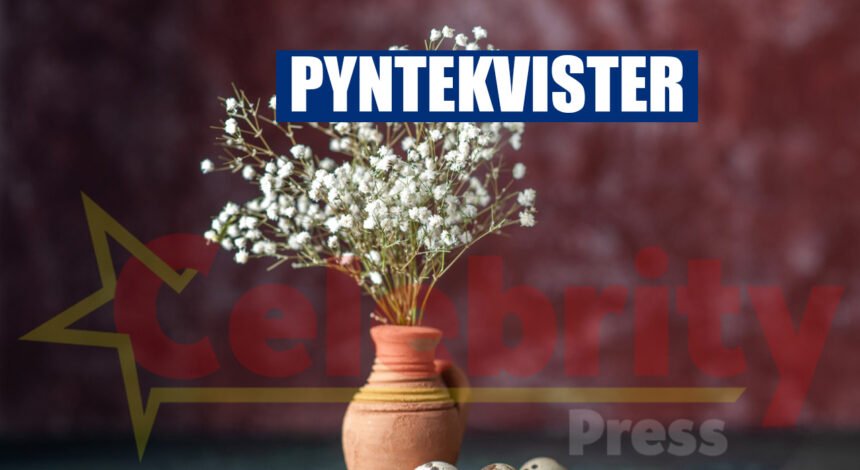
Pyntekvister is a genuine Norwegian and Danish term, combining “pynte” (to decorate) with “kvister” (twigs or branches), describing a real and long-standing Nordic home décor and holiday tradition of using decorative branches indoors. Unlike most of the coined or distorted terms covered elsewhere in this series, the content cluster built around Pyntekvister actually gets the core meaning right, consistently and accurately, across roughly ten different domains. What remains worth noting is the same suspicious multi-domain distribution pattern documented throughout this series, even when, as here, the underlying content is factually accurate.
The Genuine Meaning
“Pynte” is a standard Norwegian and Danish verb meaning to decorate or adorn, while “kvister” is the plural form of “kvist,” meaning twig or small branch. Combined, “pyntekvister” describes decorative branches, typically bare, budding, or lightly adorned twigs, birch, willow, or similar species, arranged in vases or used as seasonal décor, a genuine and recognizable practice within Scandinavian home design traditions, particularly around Easter and other seasonal transitions.
A Real and Long-Standing Nordic Tradition
Decorating with bare branches, often adorned with small feathers, ornaments, or ribbons for Easter, is a well-documented, long-practiced custom across Norway, Denmark, and parts of Sweden, reflecting the broader Scandinavian design sensibility that favors natural materials, seasonal awareness, and minimalist, nature-forward interior styling, a genuine cultural practice rather than an invented or coined marketing concept.
Where This Content Cluster Gets It Right
Sources including Rebecca Angela, News Fandom, Billionscope, Constraint Magazine, Aimgrip, Quoteroot, Brust Magazine, Discover Heading, Daily Looke, and Yooooga all correctly describe Pyntekvister as relating to Scandinavian decorative branches, with consistent framing around natural home décor, seasonal use, and Nordic design aesthetics. This is a meaningfully different pattern from cases like Innøve or Assimilasjon covered elsewhere in this series, where a real foreign word gets attached to an entirely unrelated business or technology claim.
The Still-Suspicious Distribution Pattern
Despite the factual accuracy, the sheer number of differently branded domains, roughly ten identified in this research, all publishing similarly structured explainer content about the same fairly niche Scandinavian home décor term within a similar timeframe, follows the same templated content distribution pattern documented throughout this series for far less accurate cases, suggesting a similar underlying content production process even when the specific factual claims happen to be correct this time.
Domain Mismatches Worth Noting
Two of the domains publishing Pyntekvister content are particularly mismatched with their apparent primary business: an escape room company’s domain and a brewing company’s domain both host detailed explainer articles about Scandinavian decorative branch traditions, a pattern of unrelated business domains publishing generic lifestyle or hobbyist content that recurs across many cases in this series regardless of whether the underlying facts are accurate.
Why Domain Mismatches Happen Even With Accurate Content
Domain mismatches like these typically reflect a content production or SEO strategy where a business pays for or generates generic, broadly appealing lifestyle content unrelated to its core business, aiming to capture search traffic and build general domain authority, rather than any attempt to deceive readers about specific facts; the content itself can still be entirely accurate even when its placement seems structurally odd.
Comparing Pyntekvister to Other Real-Word Cases in This Series
| Case | Real word/practice | Content accuracy |
|---|---|---|
| Assimilasjon | Yes (Norwegian academic concept) | Distorted into unrelated business claims |
| Innøve | Yes (Norwegian, means “to rehearse”) | Distorted into “innovation platform” claims |
| Pigeimmo | Yes (French real estate prospecting) | Largely accurate, misspelling of Pigimmo |
| Pyntekvister | Yes (Norwegian/Danish décor tradition) | Accurate across the cluster examined |
Why Getting the Facts Right Doesn’t Fully Resolve the Concern
Even when content is factually accurate, as it largely is here, the underlying production pattern, generic explainer content duplicated with minor variation across many unrelated domains, still reflects a search-traffic-driven content economy rather than genuine, independent interest or expertise in Scandinavian design traditions from each individual publishing site, a distinction worth understanding even when it doesn’t carry the same practical risk as the more clearly distorted or dangerous cases in this series.
What Makes This the More Benign End of the Spectrum
Pyntekvister sits meaningfully closer to the benign end of the spectrum covered throughout this series: no security risk, no financial risk, no invented product being sold under false pretenses, and reasonably accurate information about a genuine cultural practice, unlike Incestflox, Methatreams, or the various unverified business buzzwords documented elsewhere.
A Reasonable Way to Use This Content
If you’re specifically interested in trying Pyntekvister-style decorating yourself, the accurate core information available across this content cluster, using bare or budding branches like birch or willow, arranged simply in a vase, optionally adorned with small seasonal ornaments, is genuinely usable and doesn’t require the same skepticism applied to more distorted or commercially motivated terms elsewhere in this series.
Checking Any Foreign-Language Décor Term Yourself
For any unfamiliar foreign-language decorating or design term you encounter, a quick check against a bilingual dictionary for the individual word components, as done here with “pynte” and “kvister,” is a fast, reliable way to confirm whether a claimed translation or meaning holds up, a technique worth applying to any similar term regardless of how confidently a given source presents its definition.
Why This Case Is a Useful Counterexample
Pyntekvister serves a useful function in this series specifically as a counterexample: not every term appearing across a suspiciously large content cluster is inaccurate or distorted, and readers shouldn’t assume that content-farm-style distribution patterns automatically indicate false or misleading information, only that independent verification remains worthwhile regardless of how the content is distributed.
The Value of Checking Multiple Sources Even When They Agree
Even in a case like this, where the sources examined largely agree and appear accurate, checking multiple independent sources rather than relying on a single article remains good practice, both because it increases confidence in an accurate claim and because it would have caught any inaccuracy had one been present, exactly the same verification habit recommended throughout this series regardless of the eventual outcome.
What This Case Adds to the Series
Pyntekvister demonstrates that the templated, multi-domain content distribution pattern documented extensively throughout this series operates independently of whether the underlying content is accurate or distorted, a useful clarification that helps separate the question of “is this content suspiciously distributed” from the separate question of “is this content actually true.”
A Broader Reflection on Scandinavian Design Content Online
Scandinavian and Nordic design aesthetics have seen substantial genuine popularity in home décor and lifestyle media over the past decade, creating a favorable environment for content about specific, real Nordic traditions like Pyntekvister to spread widely and accurately, since publishers have a genuine incentive to get design content right for an engaged, aesthetically minded audience.
What a Genuinely Independent Source Would Add
A dedicated Scandinavian design publication, a museum ethnography page, or a Norwegian or Danish language resource discussing regional customs would add a further layer of confidence beyond the general lifestyle content cluster examined here, since these sources would typically have a direct cultural or academic interest in describing the tradition precisely rather than a search-traffic incentive alone; readers wanting the deepest level of verification could seek these out specifically.
Considering the Multiple Domain Extensions
Both pyntekvister.net and pyntekvister.com appear to exist as dedicated domains alongside the broader lifestyle magazine cluster, a structure seen repeatedly throughout this series regardless of whether the underlying term is accurate or distorted; checking what each of these dedicated domains specifically offers, whether original content, an affiliate shop, or simply another explainer article, is a reasonable next step for anyone wanting to dig further into this particular term’s online footprint.
A Reasonable Overall Assessment
Based on available research, Pyntekvister is a genuine Norwegian and Danish term for a real Scandinavian home décor tradition involving decorative branches, and the content cluster examined describes it accurately and consistently, even though the same suspicious multi-domain distribution pattern found throughout this series is still present here.
Conclusion
Pyntekvister genuinely means decorative branches in Norwegian and Danish, describing a real, long-standing Scandinavian home décor and seasonal tradition, and the content cluster built around the term describes it accurately across roughly ten domains. While the same templated, multi-domain distribution pattern documented throughout this series is present, including some domain mismatches with unrelated businesses, this case stands out as one where the underlying facts hold up to independent verification.
A Quick Reference for Concerned Readers
In short: Pyntekvister is a real Norwegian and Danish term for decorative branches, a genuine Scandinavian home décor tradition, and the content describing it is largely accurate, even though it’s distributed across an unusually large, templated cluster of unrelated domains.
FAQ
1. What does Pyntekvister actually mean?
It combines the Norwegian and Danish words for “decorate” and “twigs/branches,” referring to decorative branches used in Scandinavian home décor, particularly for seasonal and Easter decorating.
2. Is Pyntekvister a real tradition or an invented marketing term?
It’s a real, long-standing Scandinavian home décor and seasonal decorating tradition, not an invented term.
3. Is the online content about Pyntekvister accurate?
Based on this research, yes, the content cluster examined consistently and accurately describes the term’s genuine meaning and cultural context.
4. Why do so many unrelated websites publish content about Pyntekvister?
This reflects the same templated, search-traffic-driven content distribution pattern documented throughout this series, even though the underlying content in this case happens to be accurate.
5. Should I be suspicious of Pyntekvister content just because it appears on unrelated business domains?
The domain mismatch is worth noting as a pattern, but it doesn’t indicate false information in this specific case; the content itself checks out against the genuine Norwegian and Danish word meanings.
6. How can I try Pyntekvister-style decorating myself?
Arrange bare or budding branches, such as birch or willow, simply in a vase, optionally adding small seasonal ornaments, following the accurate core guidance found across the content cluster examined.
7. Is there any safety or financial risk associated with Pyntekvister content?
No, this case shows no evidence of scam, malware, or financial risk, distinguishing it clearly from riskier cases covered elsewhere in this series.
8. How does Pyntekvister compare to other Scandinavian terms covered in this series?
Unlike Assimilasjon or Innøve, which are real Norwegian words distorted into unrelated business claims, Pyntekvister’s real meaning is preserved accurately across the content examined.
9. Why does this case matter if the content is accurate anyway?
It’s a useful reminder that content-farm-style distribution patterns and factual accuracy are separate questions, and that verification remains worthwhile as a habit even when it happens to confirm rather than debunk a claim.
10. Is decorating with branches specific to a particular season?
It’s most commonly associated with Easter and early spring in Scandinavian tradition, though branch-based natural décor appears in various forms across other seasons as well.
11. Are pyntekvister.net and pyntekvister.com official sources?
Dedicated domains with this name exist separately from the lifestyle magazine cluster, but their exact nature wasn’t independently confirmed in this research, so checking what each one specifically offers is worth doing before treating either as an authoritative source.
12. What’s the single most useful takeaway from this specific case?
That a large, suspiciously templated content cluster doesn’t automatically mean the underlying information is false, checking the actual claimed word meanings against a reliable bilingual source, as done here, remains the most direct way to confirm accuracy regardless of how many or how few sites happen to be publishing about a given term, and regardless of how coordinated or organic their publishing pattern might initially appear to a skeptical reader encountering the term for the first time through a search result or a social media post referencing it.